About Us
Excellence in Eye Care. Every Stage of Life. A specialist eye clinic in Vidyaranyapura, Bengaluru, led by Dr. Sumitha Muthu.

Meet the Doctor
Dr. Sumitha Muthu
Consultant Ophthalmologist | Pediatric Ophthalmology & Strabismus
Qualifications: MS (Ophthalmology), FRCS (Glasgow), MRCS (Edinburgh), FICO, FPOS
Dr. Sumitha Muthu is an eye surgeon specialising in pediatric ophthalmology and strabismus (squint) in children and adults. She is also a phaco surgeon who operates on both adult and pediatric cataracts. She completed her training in pediatric ophthalmology and strabismus at Narayana Nethralaya, Bengaluru, and holds fellowships and qualifications from the Royal College of Physicians and Surgeons of Glasgow and other professional institutions.
Her approach to eye care is guided by careful examination, clear communication and personalised treatment recommendations. She believes in understanding each patient’s needs and recommending only what is necessary, with an emphasis on evidence-based care and informed decision-making.
When caring for children, she places particular importance on patience, age-appropriate examination techniques and a comfortable environment for both children and their parents. She takes time to address parents’ concerns, explain findings clearly and guide families through the available treatment options.
Examine carefully. Explain clearly. Recommend thoughtfully.
Professional Summary
Over 10 years in pediatric ophthalmology and squint surgery
Dr. Sumitha Muthu has over 10 years of specialised experience in pediatric ophthalmology and complex squint surgery. From 2017 to 2026 she was Consultant in the Department of Pediatric Ophthalmology and Strabismus at Narayana Nethralaya, Bengaluru, operating on squints including exotropia, esotropia, nerve palsies and Duane’s syndrome, using techniques such as adjustable recessions, modified Nishida procedures and loop myopexy.
Consultant, Department of Pediatric Ophthalmology and Strabismus
Narayana Nethralaya, Bengaluru
- Lateral rectus (LR) and medial rectus (MR) recessions and resections for exotropia and esotropia
- Inferior oblique (IO) and superior oblique (SO) procedures for A- and V-pattern squints and nerve palsies
- Adjustable squint surgery, modified Nishida transpositions, and loop myopexy for heavy eye syndrome
- Mentored junior ophthalmologists and contributed to research in strabismus management
Demonstrator, Department of Anatomy
Christian Medical College, Vellore
- Supported anatomy education through dissections and teaching medical students
Compulsory Rotating Internship
Christian Medical College, Vellore
- Foundational experience in ophthalmology, surgery and patient care
Education
Training in India, recognised in the UK
Medical degree and postgraduate training in Karnataka, fellowship training in pediatric ophthalmology and strabismus, and the FRCS in Ophthalmology.
Also
MRCS (Edinburgh)
FRCS (Ophthalmology)
Royal College of Physicians and Surgeons of Glasgow
FPOS
Fellowship in Pediatric Ophthalmology and Strabismus, Narayana Nethralaya, Bengaluru
FICO
Fellow of the International Council of Ophthalmology
MS (Ophthalmology)
Bangalore Medical College and Research Institute, Bengaluru
MBBS
JJM Medical College, Davangere
Surgical Expertise
Key squint procedures
Squint surgery adjusts the position or tension of the eye muscles. The procedure is chosen for the individual patient after a detailed examination, and results vary from person to person.
Exotropia correction
- Bilateral lateral rectus (LR) recession
- Medial rectus (MR) resection
- Adjustable techniques
Esotropia correction
- Medial rectus (MR) recession
- Lateral rectus (LR) resection
- Inferior oblique (IO) recession
Complex cases
- Third nerve palsy
- Fourth nerve palsy
- Duane's syndrome
- Heavy eye syndrome (loop myopexy)
Techniques
- Adjustable sutures
- Modified Nishida transposition
- Superior oblique (SO) tenotomy
- Full tendon shift
Awards, Research & Contributions
Recognition for research and surgical work
Young Ophthalmologist Award for Best Paper
AAPOS 2016, Jaipur
Best Paper of Session (Neuro-Ophthalmology)
AIOC 2019
Top 15 Best Anterior Segment Video Award
AIOC 2019
Top 15 Best Anterior Segment Video Award
AIOC 2019
ET Selvam Best Poster Award
AIOC 2020
Contributions
- Part of the organising team for MYOCON and POSN 2024
- Public eye health awareness events, including the Myopia Run
Professional affiliations
- Fellow, Royal College of Physicians and Surgeons of Glasgow
- Fellow, International Council of Ophthalmology
- Member, All India Ophthalmological Society (AIOS)
- Member, Karnataka State Ophthalmic Conference (KSOC)
- Member, Bangalore Ophthalmic Society
Meetings & Conferences
Active in national and international ophthalmology meetings
CMEs and Courses
Our Approach to Patient Care
How a consultation is conducted
Careful evaluation
Vision, glasses power, alignment and eye health are examined before any advice is given.
Personalised planning
The plan reflects the individual patient. Not every treatment suits every patient.
Clear communication
Parents are told what was found, what it means and what the options are, in plain language.
Age-appropriate examination
Children are examined with methods and patience suited to their age.
Follow-up and guidance
Conditions such as myopia and lazy eye need review over time, and follow-up is planned from the start.
Time for questions
Families are encouraged to ask. Good decisions depend on understanding the condition.
The Clinic
Facilities and technology
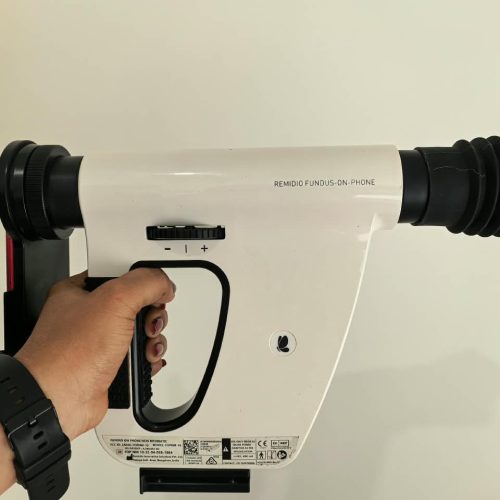
Fundus photography
Fundus Photography captures detailed images of the retina and the back of the eye using advanced imaging technology. It helps detect eye conditions such as diabetic retinopathy, glaucoma, and retinal disorders. This quick, non-invasive test supports early diagnosis and regular eye health monitoring.
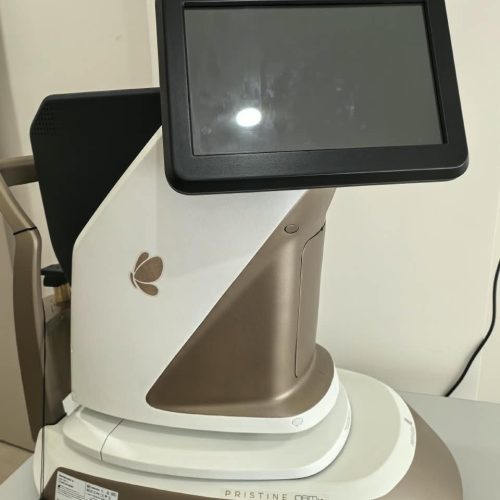
Myopia scan
A Myopia Scan helps assess nearsightedness and monitor changes in eye growth, especially in children and teenagers. It provides important measurements to evaluate myopia progression and associated risks. Regular monitoring helps eye specialists recommend suitable myopia management strategies.
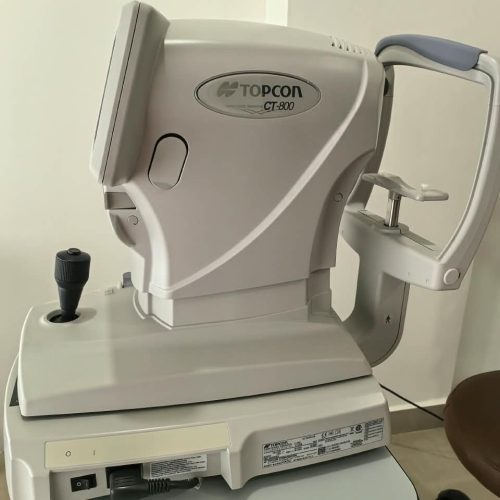
Non-contact tonometer (NCT)
Non-Contact Tonometry is a quick and painless test that measures eye pressure without touching the eye. It uses a gentle puff of air to help identify elevated eye pressure, a potential risk factor for glaucoma. This test is an important part of routine eye examinations and glaucoma screening.
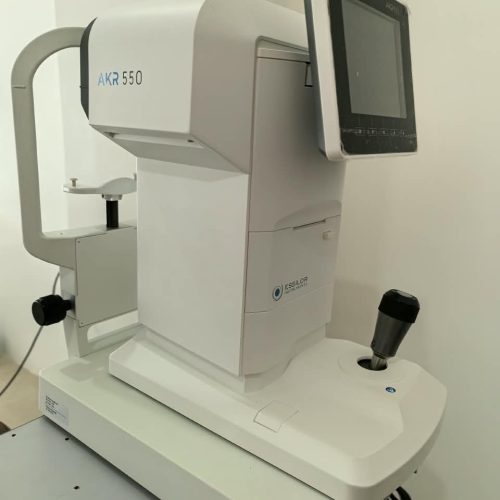
Autorefraction
Autorefraction is an automated eye test that measures refractive errors such as myopia, hyperopia, and astigmatism. It provides a quick initial estimate of the eye's focusing power to guide further vision testing. This examination helps eye care professionals determine appropriate vision correction.
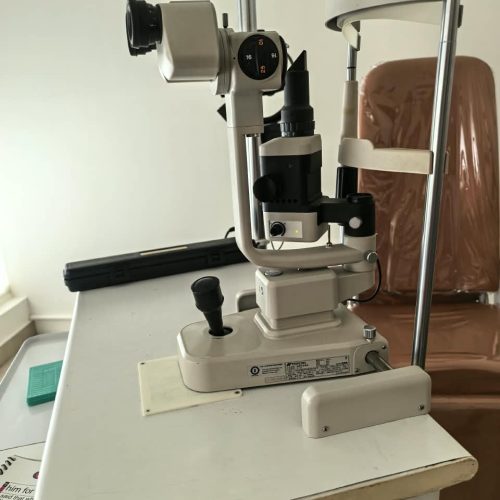
Slit lamp Biomicroscopy
Slit Lamp Biomicroscopy is a detailed eye examination that uses a specialized microscope and focused light. It helps eye specialists examine the cornea, iris, lens, and other eye structures for signs of abnormalities. This examination supports the diagnosis and monitoring of cataracts, infections, and other eye conditions.